Your best tattoo starts before you sit down: a calm, practical prep guide
Your best tattoo starts before you sit down: a calm, practical prep guide
Great tattoos aren’t just about the design and the artist; they’re also about how you prepare your skin and your day. Here’s a grounded, zero-drama checklist you can follow the week before, the day of, and right after your appointment.
One week out: set yourself up for an easy session
Lock the basics
- Confirm time, address, parking, payment method, and studio policies (ID, numbing, aftercare).
- Share any medical conditions, allergies, or medications with your artist ahead of time.
Treat your skin kindly
- Moisturise the area daily with a simple, fragrance-free lotion.
- Avoid sunburn, fake tan, and abrasive scrubs on the placement area.
Lifestyle tweaks that actually help
- Prioritise sleep. Tired bodies handle pain and stress worse.
- Hydrate well—aim for steady water intake through the week.
- Minimise alcohol for 24–48 hours before your session (it can increase bleeding).
- Don’t start new active skincare (acids/retinoids) on the area this week.
The day before: pack and prepare
What to pack
- Clean, easy-to-adjust clothing that gives your artist clear access.
- A bottle of water, light snacks, and headphones/entertainment.
- A clean power bank if you’re planning a long sit.
- Aftercare for later (more on that below).
If you plan to use numbing cream
- Make sure your artist is cool with it and follow the product label exactly.
- Do a quick patch test on intact skin to check sensitivity.
On the day: make the sit as smooth as possible
Before you go
- Eat a balanced meal; low blood sugar makes everything harder.
- Shower and arrive with clean, product-free skin (no heavy lotions, perfume, or oils).
- Wear or bring layers, studios can run warm or cool.
During the session
- Breathe, don’t hold tension; tell your artist if you need short breaks.
- Stay still and let them guide positions; good posture reduces time and irritation.
- Keep drinks/snacks tidy and away from the setup.
Numbing, the sensible way (if your artist agrees)
Topical anaesthetics (commonly lidocaine-based) can take the edge off when used as directed:
- Apply a thin, even layer to intact skin per the label timing.
- Wipe away any residue exactly as your artist requests before stencilling/linework.
- Don’t reapply unless instructions allow; more isn’t better.
- Tell your artist you’ve used it—transparency keeps everyone safe.
If you’re pregnant, breastfeeding, have skin/heart/liver issues, or have known “-Caine” allergies, get medical advice before using numbing products.
Aftercare that actually works
A fresh tattoo is controlled skin trauma. Support the barrier and leave the pigment alone.
First 24–72 hours
- Wash hands → gently cleanse with lukewarm water and a mild, fragrance-free wash.
- Pat dry. Apply a thin layer of breathable aftercare.
- Avoid soaking (baths, pools, hot tubs) and tight friction.
Days 4–14
- Continue gentle cleanse once/twice daily.
- Expect light flaking/itch—don’t pick.
- Keep out of direct sun; skip heavy rubbing from straps or equipment.
Once healed (weeks 3–6+)
- Moisturise if your skin runs dry.
- SPF 30+ on any tattoo that sees daylight—UV breaks down pigment in all styles.
Simple mistakes to avoid
- Turning up hungry, hungover or dehydrated.
- Sunburning the area (or using self-tan) just before the appointment.
- Slathering on heavy ointments or fragranced oils on fresh ink.
- Guessing aftercare, follow the studio sheet and product labels.
Your quick prep checklist
- Confirm booking, policies, and access
- Hydrate + sleep well for a few days
- Keep skin moisturised (no sunburn)
- Eat before you go; bring water/snacks
- Wear easy-access clothing
- Aftercare is ready at home
- Numbing plan agreed with your artist (if using)
The Ink Ease way
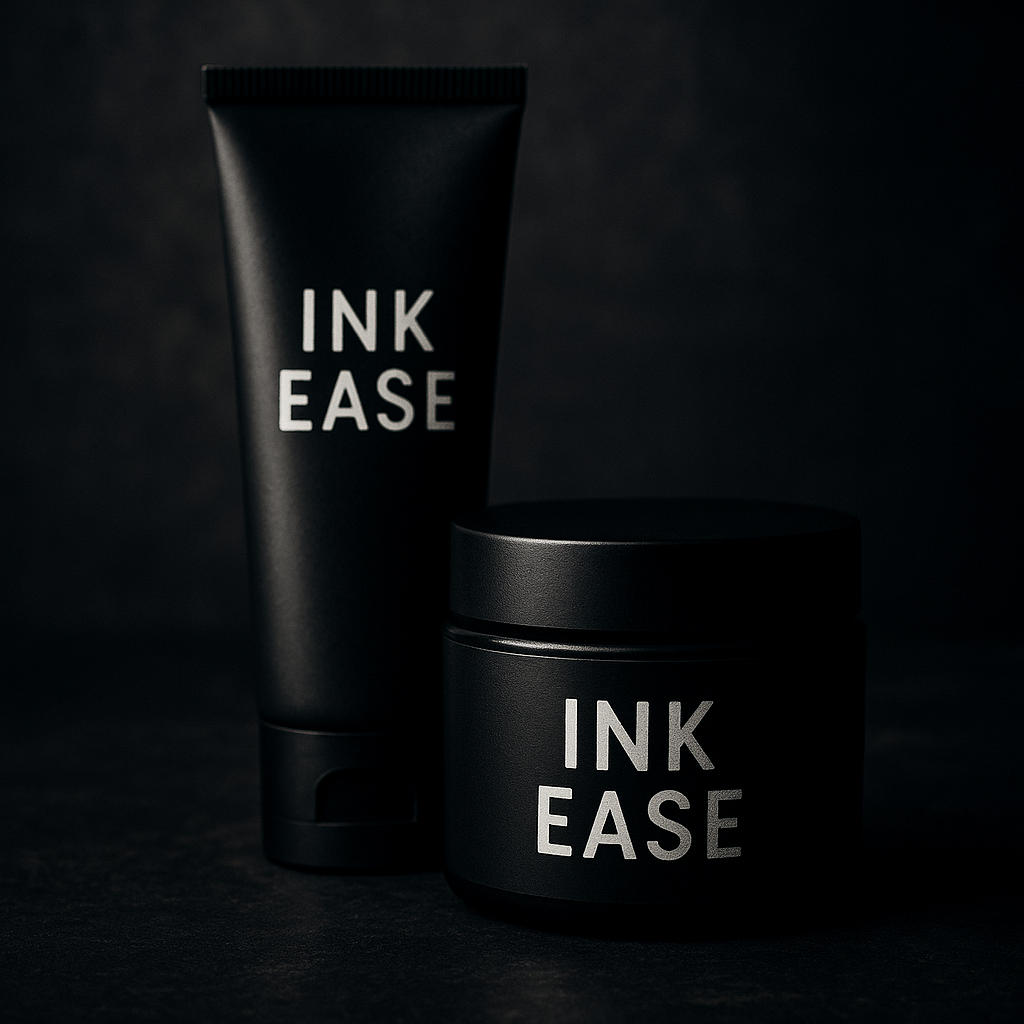
At Ink Ease we keep it calm and clear: numbing (when appropriate and approved by your artist) and skin-kind aftercare you apply in a thin layer. No perfumes, no fuss, just steps that help your skin heal well so your artist’s work looks its best for years.
If you want help choosing the right products for your next session, drop us a message. We’re happy to point you in the right direction.